
Geach Dental

When a Dental Implant Becomes a Challenge: How We Restored an Extremely Difficult Implant Case

When a Dental Implant Becomes a Challenge: How We Restored an Extremely Difficult Implant Case

Not Every Dental Implant Can Be Restored the Same Way

Most dental implants are straightforward.

A single implant is placed where a missing tooth once was, heals for several months, and then receives a custom crown that looks and functions like a natural tooth. See the example below.  
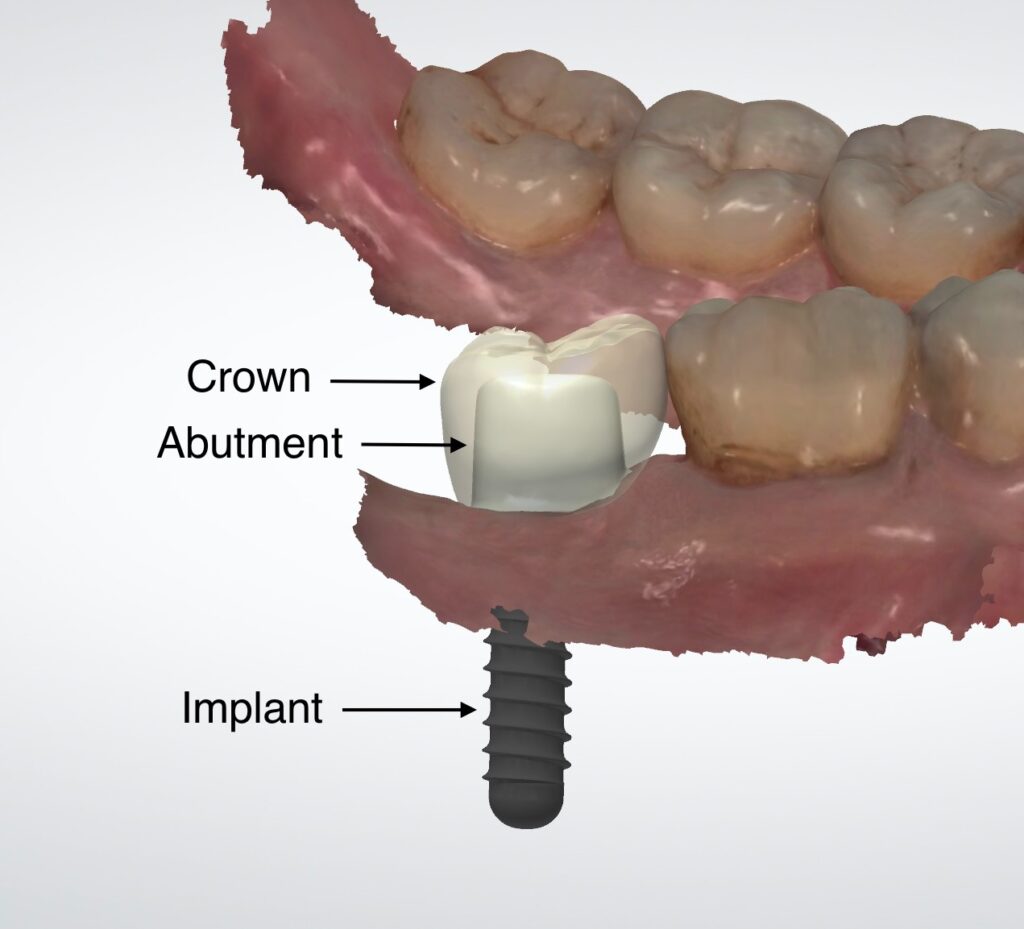
Occasionally, however, patients are referred to our office with implant situations that are far more complicated.

This was one of those cases.

The Problem: Two Implants Where Normally Only One Is Needed

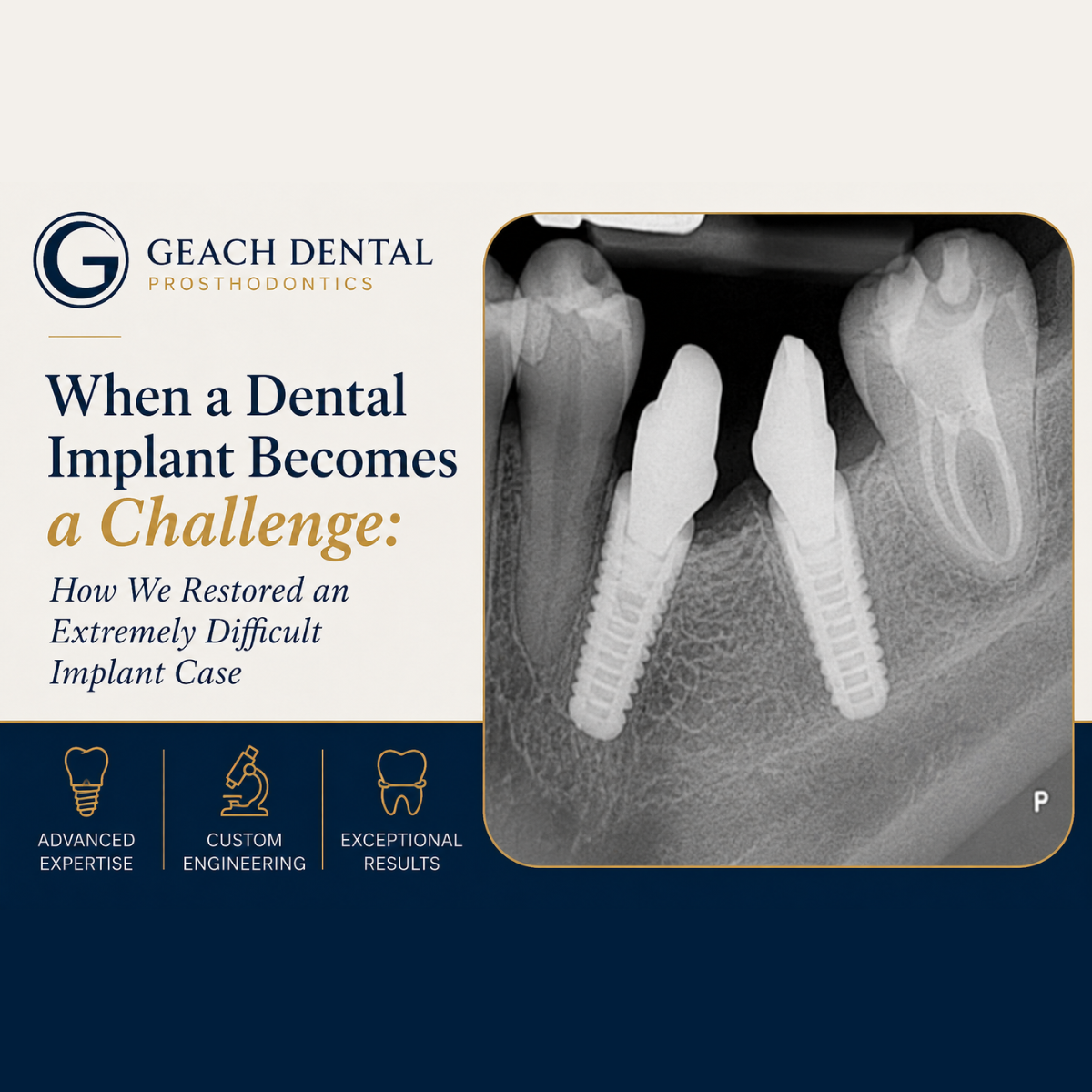
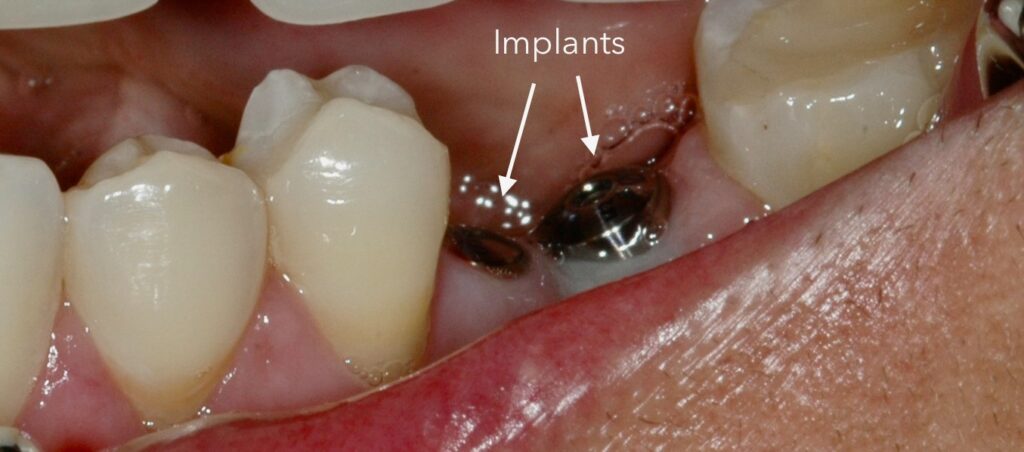
This patient was referred to our prosthodontic practice after two very narrow dental implants had been placed in the space of a single lower molar. See picture below. 

Although the implants were healthy, they were positioned extremely close together and angled toward each other. This unusual placement made it nearly impossible to place a conventional implant crown.

For many dentists, this type of case can become frustrating because standard implant components simply won’t fit.

Instead of replacing the implants, we developed a customized solution designed specifically for this patient.
Why This Was So Difficult

Think of trying to place a lid onto two jars that are leaning toward each other.

If the jars aren’t parallel, the lid won’t fit.

The same concept applies to dental implants.

Because these implants were angled differently, a traditional implant crown could not seat properly.

Without advanced prosthodontic planning, the patient may have required extensive additional treatmentโ€”or even implant replacement.

Our Solution: Custom Implant Engineering

Rather than removing healthy implants, we designed two custom implant abutments.

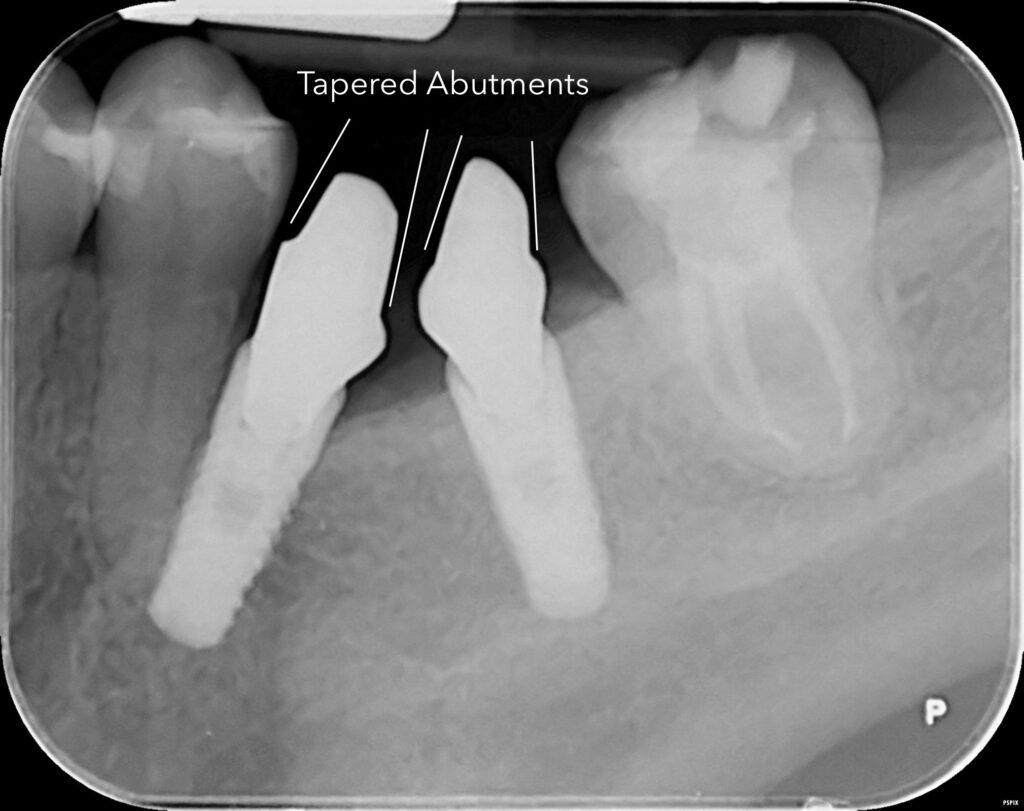
These precision-made components corrected the angulation of the implants and created a common path that allowed a single implant crown to fit accurately. See the X-ray below showing the tapered, custom abutments.
Everything was designed, and fabricated with exceptional precision in our in-office dental laboratory.

This approach allowed us to preserve the existing implants while creating a restoration that is both functional and attractive.

The Final Result

The completed implant crown:

  • Looks like a natural molar
  • Feels comfortable when chewing
  • Allows the patient to floss between the implants
  • Provides excellent long-term function
  • Preserves healthy surrounding tissue

Most importantly, the patient left with a tooth that functions naturally without requiring additional surgery.

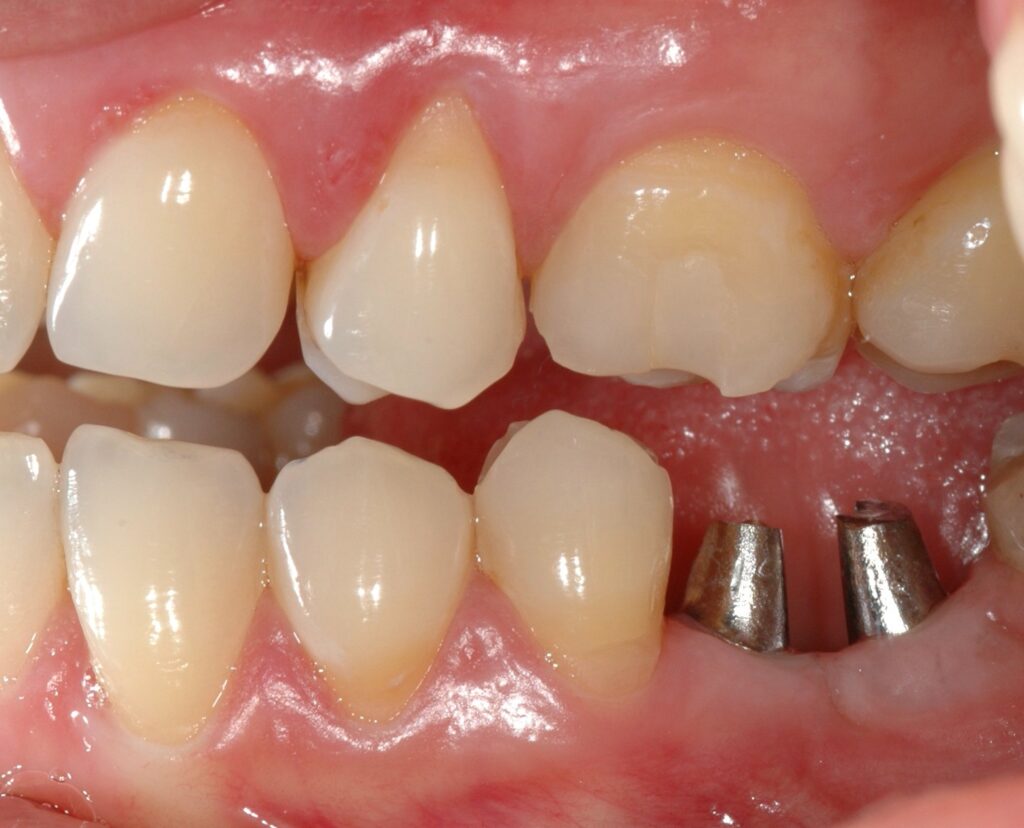
Before: 
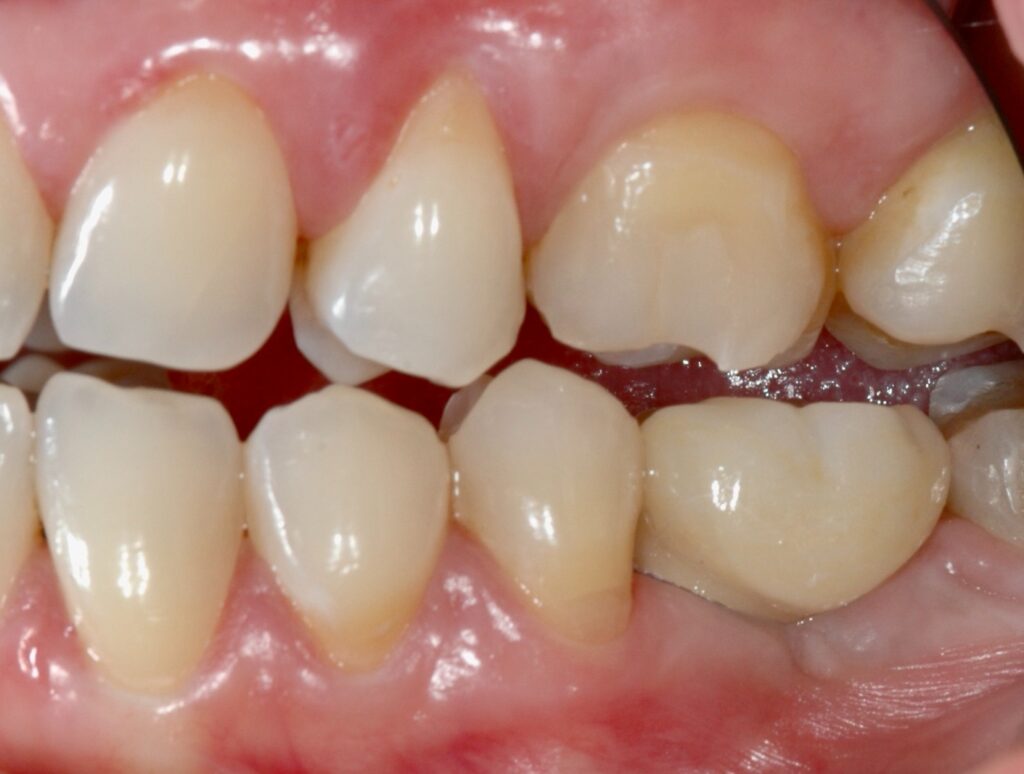
After: 
Why Experience Matters

Complicated implant restorations require far more than simply placing a crown.

They demand:

  • Advanced prosthodontic treatment planning
  • Digital implant design
  • Knowledge of implant biomechanics
  • Custom laboratory fabrication
  • Attention to esthetics, function, and long-term maintenance

As a prosthodontist, Dr. Adam Geach specializes in restoring complex implant cases that many general dental offices refer for advanced care.

Our practice treats challenging implant restorations every day, including:

  • Dental implants with poor angulation
  • Failed implant crowns
  • Broken implant restorations
  • Worn implant prosthetics
  • Multiple implant restorations
  • Full-mouth implant reconstruction
  • Cosmetic implant rehabilitation

Why Our In-Office Dental Laboratory Makes a Difference

Unlike many dental offices that outsource laboratory work, Geach Dental has its own in-house ceramic laboratory.

This allows us to:

  • Design restorations with greater precision
  • Improve communication between doctor and ceramist
  • Verify fit before delivery
  • Achieve exceptional cosmetic results
  • Deliver consistent quality control

For complex implant cases, this collaboration often makes the difference between an average result and an outstanding one.

Looking for a Specialist to Restore Your Dental Implants?

If you’ve been told your implant restoration is difficultโ€”or you’ve had a loose, broken, worn, or unattractive implant crownโ€”you may benefit from treatment by a prosthodontic specialist.

At Geach Dental, Dr. Adam Geach provides advanced implant restoration and cosmetic dentistry for patients throughout:

  • Downtown Los Angeles
  • Beverly Hills
  • Pasadena
  • Orange County
  • Newport Beach
  • Irvine
  • Laguna Niguel
  • Southern California

Call (213) 622-3339 or schedule a consultation to learn how even the most complicated implant restorations can often be successfully restored.
Search for Blog Articles

Pinteresting Board
Share

Meet Dr. Adam Geach, distinguished prosthodontics specialist and owner ofย  Geach Dental.ย 

His dental education includes Harvard School of Dental Medicine and the University of Connecticut, where he earned a D.M.D. and an M.D.Sc. in Prosthodontics, respectively. Dr. Geach holds Diplomate status with the American Board of Prosthodontics, underscoring his exceptional expertise in dental care.ย At his clinics in Los Angeles and Laguna Niguel, Dr. Geach offers a wide range of services, from cosmetic treatments to full-mouth reconstructions, all delivered with a focus on personalized patient care.Take the first step toward your ideal smile and improved oral health by clicking here.

Related blog posts

Replacing missing front teeth with dental implants

How Dental Implants Can Replace Failing Teeth and Create a Natural-Looking, Functional Smile Losing your front teethโ€”or being told they can no longer be savedโ€”can be overwhelming. Front teeth aren’t only important for your smile. They help you bite into foods, speak clearly, and feel comfortable smiling and interacting with other people. For patients with advanced gum disease, teeth can gradually lose their supporting bone, become loose, and move out of their natural positions. Eventually, saving those teeth may no longer be predictable. That was the situation for this patient. He came to Geach Dental in Los Angeles extremely self-conscious about his front teeth. He had become so uncomfortable with their appearance that he avoided smiling. But his problem wasn’t only cosmetic. A comprehensive evaluation revealed severe periodontal bone loss affecting both the upper and lower four front teeth. Over time, the upper teeth had shifted dramatically, changing his smile and compromising their position. The goal was bigger than replacing missing teeth. We wanted to rebuild his smile and restore his ability to function comfortably again. Why Couldnโ€™t the Front Teeth Be Saved? The foundation of a healthy tooth is the bone and gum tissue surrounding it. When periodontal disease becomes advanced, that supporting bone can be lost. Teeth may become mobile, migrate into different positions, and eventually reach a point where keeping them is no longer predictable. This patient also reported a long history of cigarette smoking, an important factor considered as part of his periodontal evaluation. Before beginning the prosthodontic treatment, we referred him to a periodontist for a complete periodontal evaluation. His treatment plan included periodontal therapy and oral-hygiene instruction, management of his smoking, removal of the eight severely compromised front teeth, placement of dental implants, and fabrication of implant-supported bridges to replace the missing teeth. Dental Implants Are Only Part of the Solution When replacing front teeth, successfully placing dental implants is extremely importantโ€”but it’s only part of the treatment. We also have to determine: Where should the new teeth go? This patient had lived with teeth that had shifted significantly because of periodontal bone loss. Simply reproducing their existing positions would reproduce many of the same esthetic problems. Instead, we began by designing the final smile first. Before treatment, we created a digital blueprint showing the planned position, shape, size, and proportions of the future teeth. That blueprint helped guide both implant placement and the design of the final implant bridges. Designing the Smile Before Placing the Final Teeth Our goals were to create teeth that would: This planning is especially important when dental implants are being used in the front of the mouth. Unlike natural teeth, implants cannot simply be moved after they have integrated into the bone. The final restoration therefore needs to be considered from the beginning of treatment. Temporary Implant Teeth Let Us Test the New Smile After the compromised teeth were removed and the implants placed, temporary implant-supported bridges were created from our digital design. These temporary teeth served an important purpose. They allowed us to evaluate the new smile before making the final implant bridges. We could adjust the: Most importantly, the patient could participate. He could see his new smile, live with it, and give us feedback about the appearance before we fabricated the final restorations. The temporary bridges also allowed the surrounding soft tissue to be shaped and refined during healing. Creating Natural-Looking Implant Teeth One of the greatest challenges in implant dentistry is making replacement teeth look naturalโ€”particularly in the front of the mouth. Color is only one part of the equation. Natural-looking teeth depend on subtle differences in shape, proportion, translucency, surface texture, and contours. At Geach Dental, we have the advantage of working closely with our in-office laboratory technician. For complex implant cases, the technician can meet directly with the patient and work with Dr. Geach to refine shade, shape, contours, and other details before the final restorations are completed. The objective is simple: People should see your smileโ€”not your dental implants. The Final Result: A New Smile and Restored Function The before-and-after photographs tell an important story. In the original photographs, the severe movement of the front teeth is immediately noticeable. In the final photographs, the upper and lower implant bridges restore a much more harmonious tooth position and smile. But this treatment wasn’t performed for appearance alone. The final implant-supported bridges also restored the patient’s front teeth so that they could once again contribute to normal function. The definitive restorations were fabricated from zirconia, a tooth-colored ceramic material selected for its combination of esthetics, smooth surface, and durability. The result is a dramatic change from where this patient began: fixed replacement teeth designed to restore both his smile and his ability to function. Can Dental Implants Replace Several Missing Front Teeth? Yes. Dental implants don’t necessarily require one implant for every missing tooth. In appropriate situations, strategically positioned implants can support a fixed dental bridge that replaces several missing teeth. This can be particularly useful for patients who are facing the loss of multiple teeth because of: The appropriate number and position of implants depends on each patient’s bone, gum tissue, bite, remaining teeth, health history, and restorative goals. That’s why careful planning before implant placement is so important. Why Choose a Prosthodontist for Complex Dental Implant Treatment? Replacing several missing front teeth requires more than placing implants. The final teeth need to look natural, fit the patient’s face, function with the bite, and integrate with the remaining natural teeth. A prosthodontist receives advanced specialty training in replacing and reconstructing teeth, including complex dental implant treatment. At Geach Dental, our approach combines prosthodontic planning, digital smile design, implant dentistry, provisional restorations, and close collaboration with our in-office dental laboratory. For complex cases, we also coordinate treatment with periodontal and other dental specialists when appropriate. The objective isn’t simply to replace missing teeth. It’s to reconstruct the smile as a whole. Considering Dental Implants in Los Angeles? If you have missing teethโ€”or

Read Up

When Old Veneers Make Your Smile Look Older

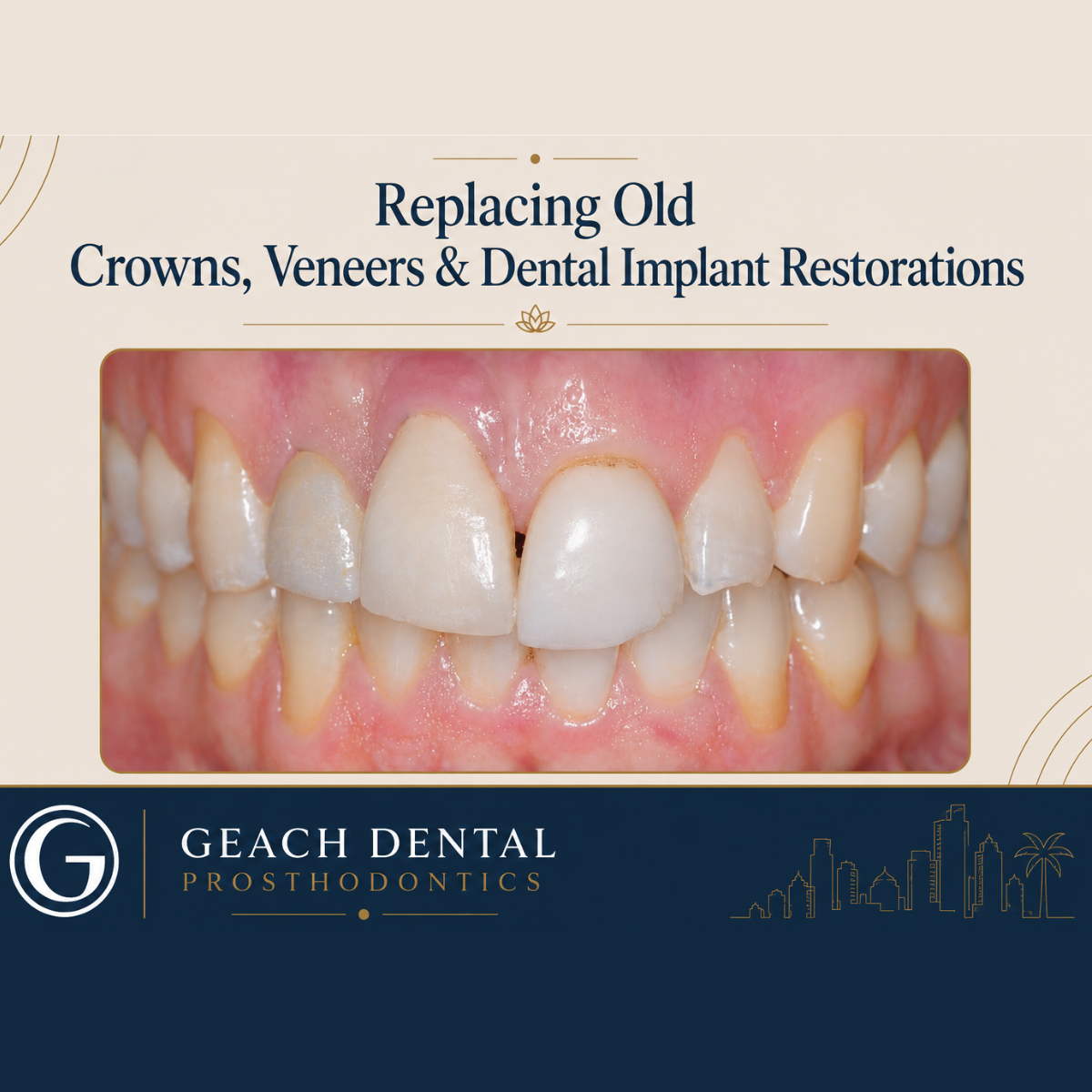
A Prosthodontic Approach to Replacing Aging Cosmetic Dentistry with Natural-Looking Restorations If you had veneers or crowns placed 10, 15, or even 20 years ago, you may have loved your smile when they were first completed. But smiles changeโ€”and so does cosmetic dentistry. Older veneers can look bulky, square, opaque, worn, or simply outdated compared with today’s more natural-looking ceramic restorations. Sometimes patients don’t want an entirely new smile. They just want their smile to look natural again. That was the goal for this patient. The Problem: Old Veneers That No Longer Looked Natural This patient was referred to Geach Dental because she was unhappy with the appearance of her four upper front teeth. Her existing veneers had several characteristics that made them stand out from her surrounding natural teeth. The front teeth appeared very square, all four restorations slanted slightly to one side, and the porcelain was relatively opaque rather than having the subtle translucency of natural enamel. See picture below.  The veneers weren’t simply “old.” They looked like dental work. Our goal was to change that. We wanted to replace the aging restorations with teeth that blended naturally into her smileโ€”without creating an artificial or overly perfect appearance. Good Cosmetic Dentistry Shouldn’t Look Like Dental Work One of the misconceptions about cosmetic dentistry is that improving a smile simply means making teeth whiter. For us, natural-looking cosmetic dentistry is much more about the details. The shape, proportions, contours, translucency, alignment, and color of the teeth all need to work together. For this patient, our goals were to: Ultimately, people should notice your smileโ€”not your dental work. Designing the New Smile Before Making the Final Teeth Before fabricating the final restorations, we created a digital diagnostic design for the four front teeth. This allowed us to establish the new tooth shapes and proportions before completing the final crowns. After removing the existing veneers, the teeth were conservatively prepared and custom temporary crowns were made from our new digital design. This is an important part of our approach to complex cosmetic dentistry. Rather than simply removing the old restorations and hoping the patient likes the final result, the temporary crowns allow us to test-drive the new smile first. The Patient Gets a Say in the Final Smile With the temporary restorations in place, the patient can see the proposed changes directly in her own mouth. We can evaluate: Most importantly, the patient can give us feedback. If we want a tooth slightly shorter, longer, softer, or more rounded, those changes can be made before the final restorations are fabricated. Once the temporary restorations look and feel right, they become the blueprint for the final teeth. That patient feedback and refinement process was an important part of this case. Why Replacing Only Four Front Teeth Can Be So Challenging You might assume that replacing four veneers is easier than restoring an entire smile. Esthetically, the opposite can sometimes be true. When we replace only a few front teeth, the new restorations must blend with the patient’s remaining natural teeth. The shade can’t simply be “white.” Natural teeth have subtle variations in color, translucency, texture, and brightness. Reproducing those characteristics is what helps a ceramic restoration look like a tooth rather than a crown. The goal is not to make four beautiful crowns. The goal is to make it difficult to tell which four teeth are crowns. The Advantage of Our In-Office Dental Laboratory At Geach Dental, we work closely with our in-office laboratory technician when creating highly esthetic restorations. This allows us to carefully control details such as: In this case, the final restorations were designed, milled, characterized, and finished in close collaboration with our technician, using the refined temporary crowns as the guide for the final result. For front teeth, these small details can make an enormous difference. The Result: A More Natural-Looking Smile The objective wasn’t to give this patient a completely different smile. It was to make her existing smile look more natural, balanced, and current. The new front teeth have softer contours, improved alignment, and a more natural relationship with the surrounding teeth. The final crowns were made from zirconia, selected to provide a combination of esthetics and durability. The improvement is noticeable. But ideally, the dentistry isn’t. That’s exactly what we want. Before After Is It Time to Replace Your Old Veneers or Crowns? Many patients assume they should only replace veneers or crowns when something breaks. That’s not necessarily the case. You may want to consider replacing older cosmetic dental work if your restorations have become: You may also simply feel that your dental work makes your smile look older than you feel. In some cases, replacing just a few aging restorations can refresh the appearance of the entire smile. Why See a Prosthodontist for Replacing Old Dental Work? Replacing existing cosmetic dentistry presents different challenges than starting with untouched teeth. The dentist needs to evaluate the existing restorations, the teeth underneath them, the bite, the surrounding natural teeth, and the patient’s overall smile before determining what shouldโ€”and just as importantly, what should notโ€”be changed. A prosthodontist receives advanced specialty training in restorative, cosmetic, implant, and reconstructive dentistry. At Geach Dental, we routinely treat patients with existing veneers, crowns, dental implants, and complex restorative dentistry. Our approach isn’t simply about making teeth look prettier. We want the final restorations to look natural, function properly, and integrate with the rest of the patient’s smile. Ready to Update Your Smile? If you had cosmetic dentistry completed years ago and your veneers, crowns, or implant restorations no longer look the way you want, you may not need to start over. Sometimes the right approach is simply to replace aging dental work with modern, natural-looking restorations. Dr. Adam Geach, DMD, MDSc, is a prosthodontist providing advanced cosmetic, restorative, and implant dentistry at Geach Dental, serving patients in Downtown Los Angeles and Orange County. If you’re unhappy with old veneers, crowns, or other cosmetic dental work, schedule a consultation

Read Up

Follow Our Newsletter To Stay Tuned

Sign up to receive exclusive guides & tips on health, fashion, travel, beauty and more!

Follow Our Newsletter To Stay Tuned

Sign up to receive exclusive guides & tips on health, fashion, travel, beauty and more!